08.04.2026

Turn Your Pool into a Fitness Space – Training in Water at Home

What Can a Pool Really Be Used For?

A pool is often associated with relaxation, cooling off on warm days, and spending time outdoors. But a well-designed pool can do more than that. It can support movement, recovery, and everyday wellbeing — especially when it is treated not only as a garden feature, but as a practical part of daily life.

This is particularly relevant in the case of wooden pools. They bring a natural, refined look to the outdoor space, but they can also offer real functional value when planned with everyday use in mind.

More than swimming

Swimming is the most obvious use of a pool, but it is not the only one. Water creates a comfortable environment for many forms of movement: short cardio sessions, mobility exercises, light resistance work, recovery routines, or low-impact activity that feels easier on the body than land-based training.

Because water supports the body while creating natural resistance, even simple exercises become effective. Walking in water, leg work, arm movements, balance exercises, and short interval sessions can all provide meaningful physical benefits without requiring long workouts or advanced training. That makes a pool useful not only for recreation, but also for regular, realistic movement that fits into everyday life.

Small pool, real possibilities

A pool does not have to be large to be functional. In bigger pools, exercise is usually more continuous and distance-based. In smaller pools, the focus shifts towards shorter repetitions, controlled movement, and resistance.

This is where smart design becomes important. A compact pool can still work very well for short exercise sessions, mobility work, aqua jogging, leg and core activation, or simple recovery after a physically demanding day.

What matters is not only the size of the pool, but how the space is used. A smaller pool can still support regular movement if it is seen as a place for purposeful use, not only occasional leisure.

Why water works so well

Water offers a combination that is difficult to achieve in other environments. It reduces impact on the joints while adding resistance to every movement. This makes exercise feel smoother, but not ineffective.

As a result, a pool can support different needs at different times: activation in the morning, light exercise during the day, or slower recovery in the evening. It can also make regular movement easier to maintain, because a session does not need to be long or intense to feel worthwhile.

In many cases, fifteen focused minutes in the water are enough to activate the body, improve circulation, and create a clear sense of physical reset.

A simple 15-minute pool routine

A short session can be one of the most practical ways to use a pool regularly. It does not require much time, and it can be adapted to both larger and more compact pool formats.

A simple routine might begin with two or three minutes of warm-up: walking or jogging in place, arm circles under water, and gentle torso rotation. The central part of the session can then combine faster movement with basic resistance exercises — for example, short swimming intervals, squats in water, high knees, leg kicks, arm pushes, and light core work. The final minutes can be used for slower walking, stretching, and breathing.

The strength of this kind of routine lies in its simplicity. It is easy to repeat, easy to adjust, and realistic enough to become part of a weekly rhythm.

A feature that adds real value to wooden pools

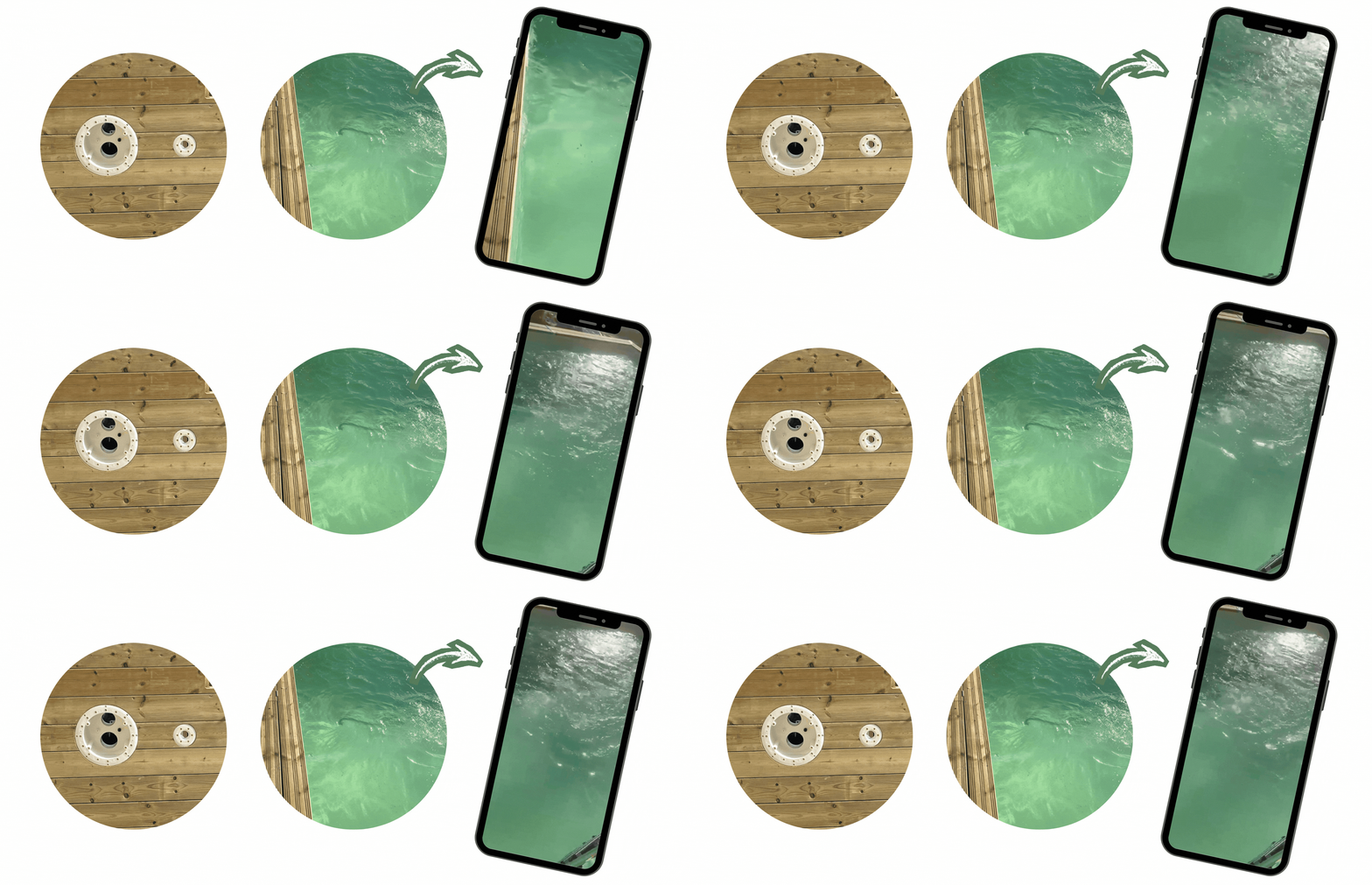
Some pool features significantly expand how the space can be used. One of the most effective is a counter-current system.

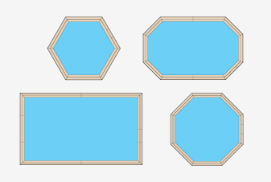
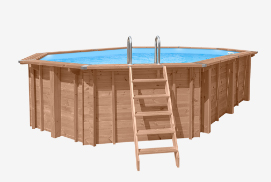
In the case of wooden above-ground pools, this is especially important. These pools are often chosen for their appearance, natural materials, and the way they fit into the garden. But the ability to install a counter-current system shows that their value goes well beyond aesthetics. An above-ground wooden pool can be elegant, compact, and highly functional at the same time.

This matters because it changes how the whole segment is perceived. A wooden above-ground pool is not only a visually attractive alternative to other pool types. It can also offer the same kind of active use that many people associate mainly with larger or more technical pool solutions. The addition of a counter-current system proves that choosing wood does not mean giving up functionality.

With a controlled water flow, the user can swim in place instead of being limited by the pool’s length. This makes regular swimming possible even in a more compact pool and creates better conditions for interval training, endurance work, and technique-focused exercise. It also increases the practical value of the wooden pool in daily use, turning it into a space for movement as well as relaxation.

For wooden pools, this is a strong advantage. It combines the warmth and character of natural material with a level of performance that adds real long-term value. The result is a pool that not only looks premium in the garden, but also works harder in everyday life.

A different way to think about a pool

The most important shift happens when a pool is no longer seen as something used only from time to time. A pool becomes more valuable when it supports a routine — a short session before work, light movement in the evening, or a few minutes of recovery at the end of the day.

Seen this way, a pool offers more than leisure. It becomes a practical space for movement, wellbeing, and better use of time at home.

And that is where its real value begins: not only in how it looks, but in how naturally it fits into the way people want to live.


Add comment

Abatec - UE

By continuing to use this website, you agree to the use of cookies cookie policy.

The cookie settings on this website are set to "allow cookies" to give you the best browsing experience possible. If you continue to use this website without changing your cookie settings or you click "Accept" below then you are consenting to this.

Close